
Stakeholders Urge North-East States to Prioritise Early Child Care, Education in 2027 budgets

By Ahmed Kaigama
Stakeholders have called on governments of the 6 North-East states to prioritise Early Child Care and Education (ECCE) and other Early Childhood Development (ECD) interventions in their annual budgets.
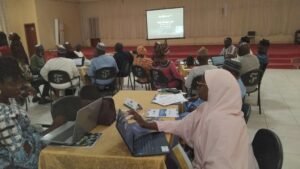
The stakeholders made the call at the end of a three-day Regional Consultative Workshop on ECD held on Thursday in Maiduguri.
The workshop, which brought together representatives of the six states, focused on identifying priority interventions that would improve the wellbeing, learning and development of children during their formative years.
Mr Abubakar Usman, a participant from Bauchi, said ECCE should be adopted across the region as a comprehensive approach covering the physical, social, emotional and cognitive development of children from birth to eight years.
He said ECCE, through play-based learning and quality childcare, would provide a strong foundation for lifelong health, wellbeing and learning.
Usman explained that the early stage of childhood development, particularly between birth and two years, required attention to infant care, health, nutrition and sensory-motor growth.
He added that pre-primary education for children aged three to five or six years served as a bridge between the home and formal education by introducing children to structured and play-oriented learning environments.
According to him, investment in ECCE would promote brain development, school readiness, language acquisition and social-emotional stability, while reducing inequality and supporting stronger communities and economic growth.
Usman also urged state governments to make the reduction of stunting a priority in their annual budgets.
He warned that poor nutrition, repeated infections and inadequate care could impair children’s physical growth and brain development.
Usman said the first 1,000 days, from conception until a child attained two years, remained a critical window for preventing irreversible damage associated with stunting.
He identified poor maternal and child nutrition, inadequate breastfeeding and complementary feeding, food insecurity.
“Repeated illnesses, poor sanitation and inadequate access to clean water as major contributors to stunting,” he said
The Shehu of Borno, Alhaji Abubakar Umar-Garbai, represented by the District Head of Maisandari, Alhaji Abba Bukar, said child upbringing was the responsibility of parents and the community.
He pledged that traditional institutions would continue to champion ECD and mobilise other traditional leaders to support the initiative and lead by example.
Dr Ahmed Abdulwahab of the Nigeria Governors’ Forum (NGF) said the consultation was aimed at securing inputs from the 6 states on priority ECD interventions for inclusion in their 2027 budgets.
Abdulwahab said representatives of the Ministries of Budget, Health, Education, Women Affairs, Water Resources and Local Government, as well as ALGON, participated in the consultation.
He said the workshop was designed to promote a multisectoral approach because “the child is one”, requiring coordinated interventions in nutrition, health, education, protection and other areas.
According to him, the NGF Secretariat would support Ministries, Departments and Agencies in addressing implementation bottlenecks and providing state governors with information needed for effective decision-making.
Dr Zainab Idris, Lead Facilitator and National President of the Medical Women’s Association of Nigeria, described the consultation as engaging and productive.
She stressed the importance of coordinated action among sectors to ensure that children in the North-East receive the necessary support during their critical early years.