
Climate Change: Gubio Warns Nigerians Against Environmental Degradation
Elder statesman and Chairman of the Nigerian Red Cross Society, Borno State Branch, Dr Bulama Mali Gubio, mni, has urged Nigerians to take urgent measures to protect the environment, warning that changing weather patterns and environmental degradation are threatening communities and future generations.
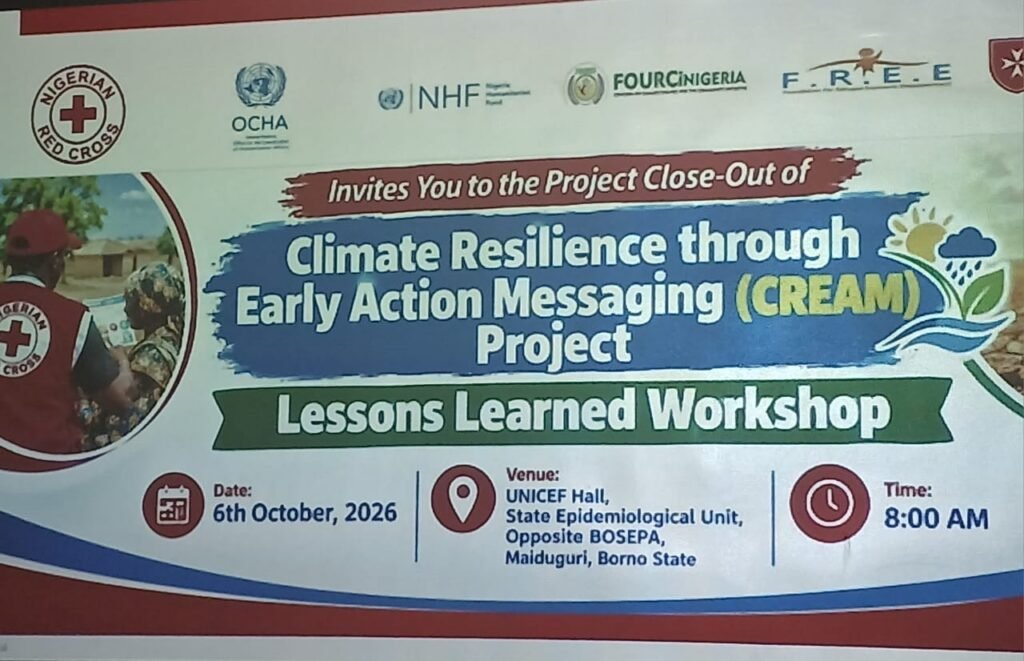
Gubio gave the warning on Tuesday in Maiduguri while speaking with journalists during the Project Close-Out and Lessons Learned Workshop of the Climate Resilience through Early Action Messaging (CREAM) Project.
The workshop, held on October 6, 2026, at the UNICEF Hall, State Epidemiological Unit, opposite BOSEPA, Maiduguri, was organised by the Nigerian Red Cross Society in collaboration with the Nigeria Humanitarian Fund (NHF) and the United Nations Office for the Coordination of Humanitarian Affairs (OCHA), with support from FOURCiNIGERIA and F.R.E.E.
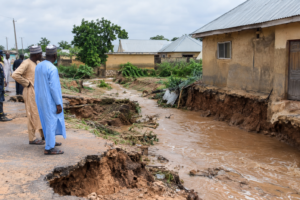
He said climate change is no longer a distant threat but a reality whose effects are already being felt through flooding, extreme heat, pollution, unpredictable rainfall, and other environmental changes.
According to him, human activities have contributed significantly to environmental degradation, with consequences for agriculture, health and livelihoods.
“Climate change is practically real, and we need to do something. Every human being needs to do something to correct the situation. Otherwise, our lifespan will be shortened, and our children will be affected,” he said.
Gubio expressed concern over changing rainfall patterns in Maiduguri, noting that the timing and distribution of rainfall had become increasingly unpredictable.
He said the changes should serve as a warning to communities and governments to strengthen preparedness and take early action against climate-related risks.
The elder statesman also raised concerns over environmental pollution and its possible effects on agriculture and human wellbeing, urging Nigerians to adopt practices that would reduce pressure on the environment.
He called on households to maintain clean surroundings and dispose of waste responsibly, stressing that environmental protection should begin at the individual and household levels.
“Cleanliness in the house, from each house, will improve the cleanness of the town, of the city, and of general human activity,” he said.
Gubio also advocated greater use of organic manure in agriculture, arguing that traditional farming practices could help maintain soil fertility and reduce excessive dependence on chemical fertilisers.
Red Cross takes campaign to communities
Also speaking, the Secretary of the Nigerian Red Cross Society, Borno Branch, Muhammad Zanna Barma, said the organisation embarked on the climate awareness project as part of its mandate as an auxiliary to government.
Barma said the Red Cross had the responsibility of creating awareness on issues that could affect communities, including disease outbreaks, disasters and environmental changes.
He said the organisation was particularly concerned about increasing climate change volatility and its impact on vulnerable households.
“We are keen on creating awareness of climate change volatility, where we have been into different households,” he said.
He explained that Red Cross volunteers had been taking climate-related messages directly to communities, including households, places of worship, markets and motor parks, to help residents understand climate risks and the importance of taking early action.
Barma said the awareness campaign had focused particularly on communities in Maiduguri and Jere Local Government Area.
The workshop brought together government representatives, community and religious leaders, volunteers, representatives of organisations and other stakeholders.
Discussions at the programme also focused on measures to strengthen community resilience, including livelihood support and the provision of equipment to vulnerable communities affected by climate-related challenges.
The programme featured presentations, interactive discussions, a question-and-answer session and a review of activities carried out under the climate-change intervention.