

Humanitarian Stakeholders Seek Stronger Government Leadership, Sustainable Funding in North-East
By Ali Mohammed Zanna, Maiduguri
Humanitarian stakeholders have called for stronger government leadership, sustainable funding and greater participation of local organisations in humanitarian interventions to ensure continued support for vulnerable communities in Nigeria’s North-East.
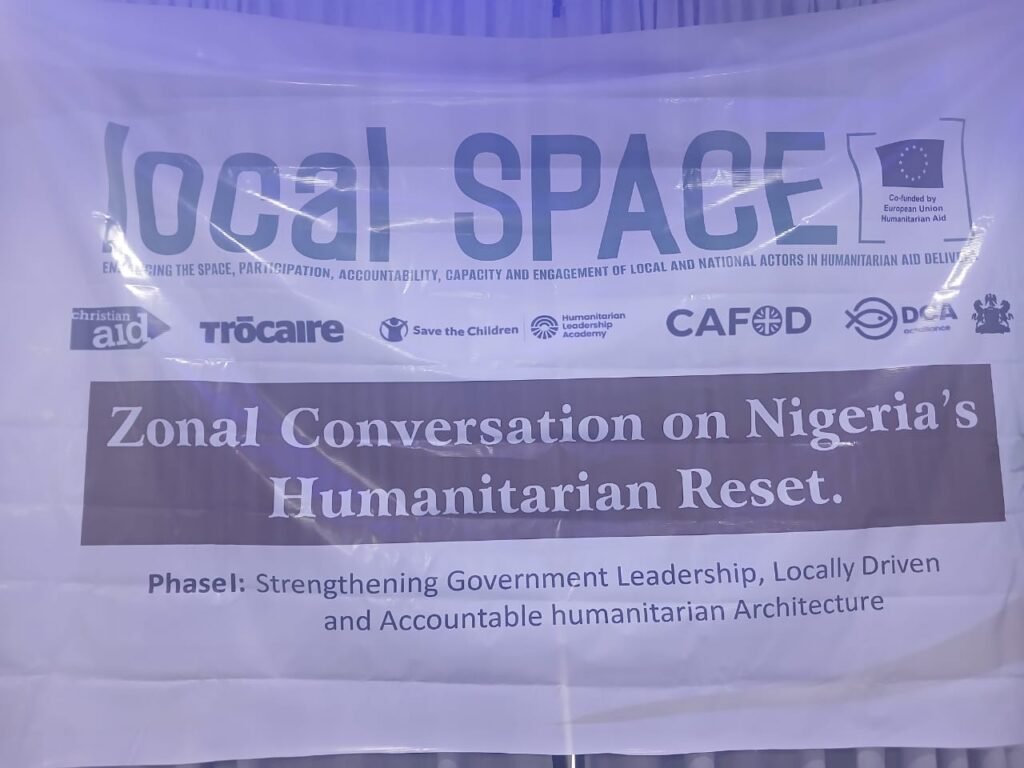
The call was made during a Zonal Conversation on Nigeria’s Humanitarian Reset held in Maiduguri, Borno State, under Phase I of the Local SPACE initiative.
The engagement, themed “Strengthening Government Leadership, Locally Driven and Accountable Humanitarian Architecture,” brought together humanitarian organisations and other stakeholders to review progress and discuss strategies for strengthening humanitarian response.
The Local SPACE initiative, which is co-funded by the European Union Humanitarian Aid, seeks to enhance the participation, accountability, capacity and engagement of local and national actors in humanitarian assistance.
The initiative involves humanitarian organisations, including Christian Aid, Trocaire, Save the Children, Humanitarian Leadership Academy, CAFOD and DanChurchAid (DCA), among other partners.
Participants expressed concern over the changing humanitarian landscape, particularly the withdrawal or reduction of activities by some international humanitarian organisations, and its potential impact on communities affected by conflict and displacement.
They stressed the need for government to assume greater responsibility for financing and coordinating humanitarian interventions, particularly in sustaining essential services, livelihood programmes and assistance to vulnerable populations.
Speaking on the objectives of the engagement, Hamsatu James said the meeting provided an opportunity for partners to review collective achievements, identify challenges and strengthen collaboration towards improving humanitarian response.
Dr Mimidoo recalled that a national-level meeting had earlier been held in Abuja before the zonal engagement in Maiduguri.
Also speaking, Ambassador Ahmad Shehu highlighted issues discussed at the meeting and emphasised the importance of sustained partnerships in addressing humanitarian challenges across the region.
Participants noted that the transition towards a locally driven humanitarian system must be supported by adequate funding, functional institutions, effective coordination and accountability mechanisms.
They further called for stronger collaboration among government institutions, local organisations, international development partners and affected communities to ensure that vulnerable people are not left without essential assistance.
The meeting underscored the importance of building a sustainable humanitarian architecture that empowers local actors while strengthening government leadership in responding to humanitarian needs.


