
FAO trains stakeholders on disaster preparedness, early warning systems in Yobe
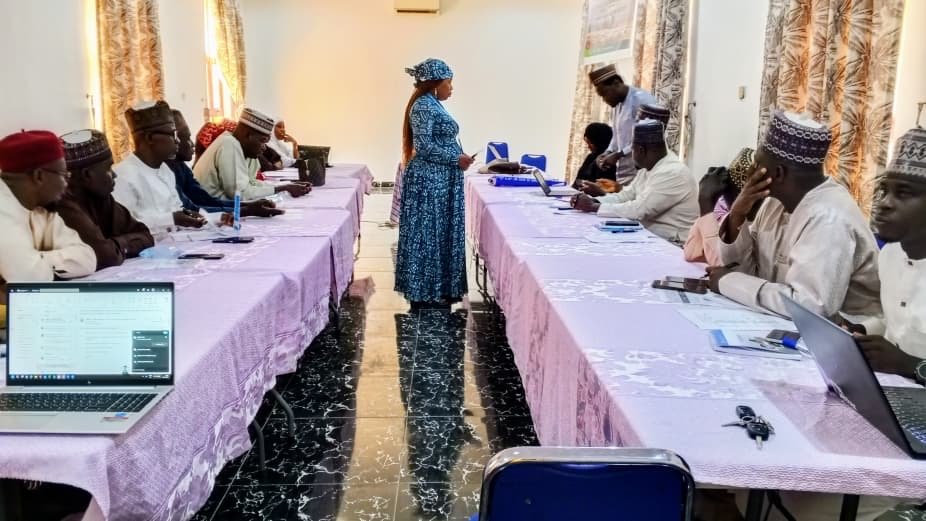
The Food and Agriculture Organization of the United Nations (FAO), in collaboration with the Yobe Government and with funding support from the Government of Belgium, has organised a four-day capacity-building training on disaster risk reduction and early warning systems for stakeholders in the Northeast.
The training, holding from Nov. 24 to Nov. 27 in Damaturu, is aimed at strengthening the capacity of government institutions and community stakeholders in Borno, Yobe and Adamawa to identify climate-related risks, interpret early warning information and take timely action to minimise the impact of disasters.
The programme, supported through FAO’s Special Fund for Emergency and Rehabilitation Activities (SFERA), focuses on Disaster Risk Reduction (DRR), Early Warning Systems (EWS), Anticipatory Action and climate risk preparedness.
Speaking at the training, a Natural Resources and Energy Expert with FAO, Prof. Yakaka Maina, said the programme was designed to equip participants with practical knowledge and skills to improve disaster preparedness and protect vulnerable communities and agricultural livelihoods.
Maina explained that the training was being conducted across the three states, noting that the Borno session had been concluded with 22 participants, while the Yobe session was ongoing and Adamawa was expected to follow.
She said participants were drawn from State Emergency Management Agencies (SEMAs), Agricultural Development Programmes (ADPs), relevant government institutions and community leadership structures to ensure effective dissemination of early warning information at the grassroots.
According to her, FAO’s approach to disaster risk management goes beyond protecting human lives and household assets to safeguarding agricultural livelihoods, particularly livestock, which are also vulnerable to climate-related hazards.
She explained that extreme weather conditions, including heat waves, could affect both humans and animals, making it necessary for disaster preparedness interventions to incorporate measures for protecting livestock and other agricultural assets.
The FAO expert also highlighted the importance of disease surveillance, noting that the organisation, through its Emergency Centre for Transboundary Animal Diseases (ECTAD), supports early detection and timely response to animal disease threats.
She said the inclusion of ADP extension agents was intended to strengthen the dissemination of climate-smart agricultural practices and early warning information to farmers, while SEMA officials would acquire additional knowledge on integrating agricultural concerns into disaster preparedness and response.
Maina said participants would also be exposed to practical tools for flood risk mapping, interpretation of early warning information and development of community preparedness plans, using Nigeria’s 2026 Annual Flood Outlook and relevant national and FAO guidelines.
She added that the sessions would feature technical presentations, group discussions, hazard mapping, simulation exercises, role plays and community action planning, with attention also given to drought and other climate-related hazards.
The expert expressed the expectation that participants would replicate the knowledge acquired by organising further sensitisation and training activities for officials, extension workers, farmers and communities within their respective areas of responsibility.
Earlier, the Director of Planning, Research and Statistics at the Yobe State Emergency Management Agency (SEMA), Adamu Mohammed, said recent flooding across the country had resulted in the destruction of homes, farmlands and other sources of livelihood.
Mohammed observed that some of the losses could be minimised if early warning information reached vulnerable communities promptly and was translated into practical preventive measures.
He urged participants to ensure that information from the Nigerian Meteorological Agency (NiMet) and other relevant agencies was effectively communicated to communities, local government areas and villages in local languages, including Hausa, Kanuri and Fulfulde.
Also speaking, the Director of Disaster Management in the Yobe Ministry of Humanitarian Affairs and Disaster Management, Aisha Wali, said the ministry played a significant role in coordinating disaster preparedness, mitigation and response activities across the state.
Wali said the ministry regularly conducted sensitisation campaigns across the 17 local government areas, particularly in flood-prone communities, to educate residents on precautionary measures before the rainy season.
She added that community volunteers had also been engaged to provide immediate reports and photographic evidence of disaster incidents to facilitate government assessment and appropriate response.
The training brings together representatives of SEMAs, ADPs, relevant ministries, the National Emergency Management Agency (NEMA), community leaders, persons with disabilities, project beneficiaries and other stakeholders.
The initiative is expected to strengthen institutional coordination, promote inclusive community preparedness and improve the translation of early warning information into timely anticipatory action to protect lives, livelihoods and agricultural production.