Foundation, ACReSAL Train Bauchi Women on Climate-Smart Agriculture

By Ahmed Ahmed
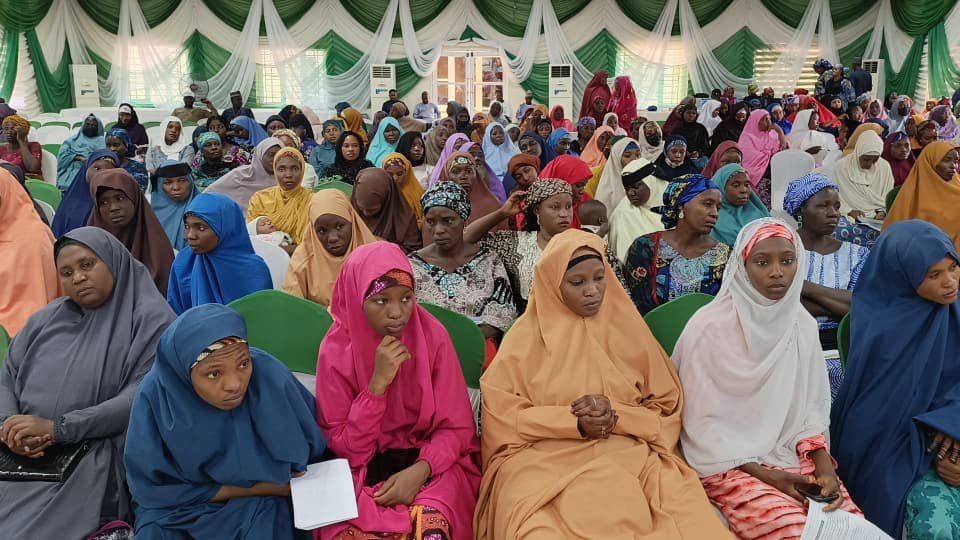
Al-Muhibbah Foundation and the Agro-Climatic Resilience in Semi-Arid Landscapes (ACReSAL) have trained 300 women in Bauchi State on climate-smart agriculture to enhance food security and economic resilience.
The Executive Director of Al-Muhibbah Foundation, Dr Ladi Ibrahim, said at the training in Bauchi that regenerative agriculture and home gardening were critical to restoring degraded land and promoting women’s economic independence.
She described the initiative as a movement toward resilience and sustainability for women drawn from the state’s 20 Local Government Areas.
Ibrahim said the programme was implemented in collaboration with the Bauchi State Government and funded under the World Bank-supported ACReSAL project.
She said participants received hands-on training in climate-smart and organic vegetable production, including spinach and moringa, seedling development, and preparation of organic fertiliser and pesticides.
According to her, regenerative agriculture promotes soil restoration, water conservation and sustainable crop production, which are essential in semi-arid regions facing desertification and climate change.
Ibrahim added that beneficiaries were expected to establish backyard gardens, improve household nutrition, generate income and mentor other women in their communities.
Also speaking, the Bauchi ACReSAL Project Coordinator, Dr Kabir Ibrahim, said 600 women would benefit from the first and second phases of the programme.
He said participants would receive start-up inputs, small grants and post-training monitoring to support implementation and assess impact.
Kabir said the intervention combined livelihood support with evidence-based learning for possible expansion to at least 6,000 women across the state.
He added that empowering women through climate-resilient agriculture would enhance household welfare, strengthen local economies and improve community adaptation to climate change.
Kabir noted that women and children remained the most vulnerable to environmental shocks, underscoring the need for inclusive resilience programmes in the state. (NAN)