Buni’s Footprint Across Yobe: No Community Left Untouched by Development

By Ahmed I. Abba
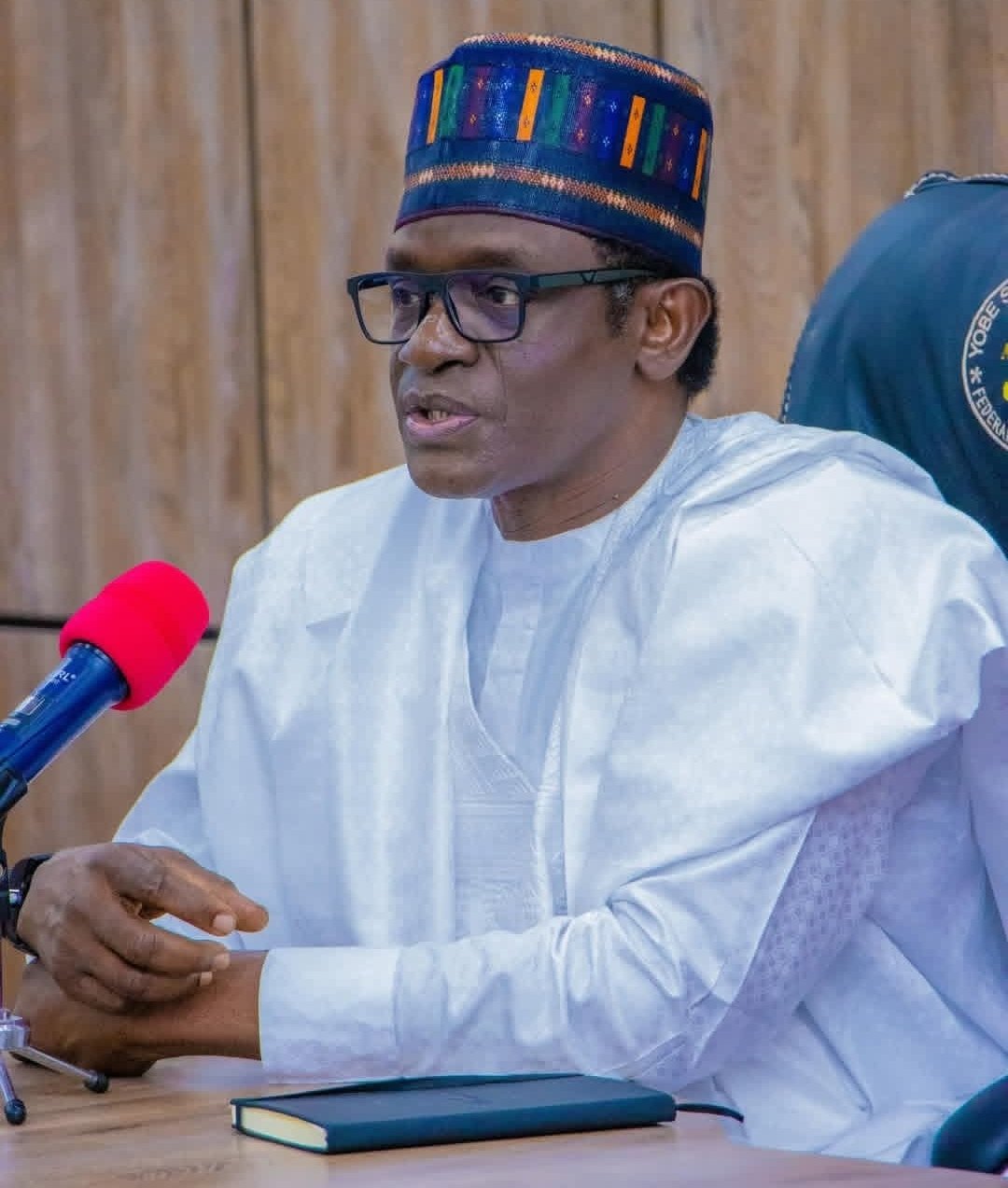
Yobe State, comprising 17 local government areas, has witnessed a deliberate policy of equitable project distribution under Governor Mai Mala Buni, with development spread across all communities. This approach underpins the governor’s oft-repeated challenge to critics to identify any political ward that has not benefited from one form of intervention or another—an assertion reinforced by visible investments across healthcare, agriculture, infrastructure and social services.
Healthcare: Expanding Access and Capacity
The health sector represents one of the most structured and far-reaching interventions of the Buni administration. In a state once constrained by limited access to basic healthcare, the government initiated the construction of 178 Primary Healthcare Centres, with over 50 fully completed and equipped to deliver round-the-clock services.
These facilities are fitted with laboratories, pharmacies and staff quarters, addressing both access and manpower retention challenges. The administration also strengthened the workforce through improved remuneration under CONMESS and CONHESS, alongside full payment of hazard allowances.
Yobe’s progress in the sector earned regional recognition, including a $500,000 performance award in the North-East Primary Healthcare Leadership Challenge, underscoring measurable improvements in service delivery.
Specialised investments, including maternal and child health services and biomedical support facilities, further reflect a comprehensive approach to healthcare development.
Agriculture: Large-Scale Investment in Food Security
Agriculture, the backbone of Yobe’s economy, has received unprecedented financial commitment. The administration invested about N15.3 billion in what stands as one of the largest agricultural empowerment programmes in the state’s history.
The intervention supported 5,340 farmers across 178 wards, ensuring equitable reach and boosting productivity at the grassroots. Distribution of fertilisers, improved seeds and farming implements has significantly enhanced cultivation capacity.
These efforts have strengthened food security, improved rural incomes and contributed to post-insurgency recovery, particularly in agrarian communities.
Road Construction: Opening Up the State
Infrastructure development, especially in road construction, has been central to the administration’s strategy of economic integration. The government has constructed and rehabilitated hundreds of kilometres of roads, linking communities and facilitating movement of goods and services.
Major projects include the Damaturu–Kalallawa dual carriageway, the Gujba–Ngalda road, and multiple township road networks across key urban centres.
These projects have reduced travel time, improved access to markets and enhanced connectivity between rural and urban areas.
Markets and Commercial Development
To complement agricultural growth and stimulate commerce, the administration invested in the construction and upgrade of modern markets across the state.
These facilities have improved the business environment for traders, enhanced revenue generation and strengthened Yobe’s role as a commercial hub, particularly in towns with significant trading activities.
The modernisation of market infrastructure has also contributed to safer and more organised trading spaces.
Housing: Supporting Growth and Resettlement
Addressing housing deficits and the impact of displacement, the Buni administration approved about 3,600 housing units under its mass housing initiative.
The programme includes 1,800 units in its first phase, with an additional 1,800 units planned, targeting civil servants, low-income earners and displaced persons.
These projects have supported resettlement efforts, reduced urban pressure and contributed to structured urban expansion.
Cargo Airport and Strategic Infrastructure
In a forward-looking move to diversify the state’s economy, the administration initiated the development of a cargo airport, alongside complementary logistics infrastructure such as trailer parks.
This initiative is designed to facilitate trade, attract investment and position Yobe as a gateway for regional commerce, particularly in agricultural exports.
Water Supply, Empowerment and Social Investment
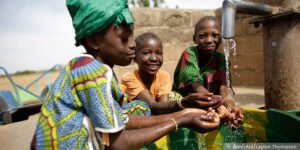
Beyond core infrastructure, the administration has implemented impactful social interventions. These include the conversion of 170 boreholes to solar-powered systems, ensuring sustainable water supply across communities.
Economic empowerment programmes have also delivered tangible results, with distribution of 475 tailoring and embroidery machines and 350 tricycles to persons with disabilities, alongside financial support for small-scale entrepreneurs.
These initiatives have strengthened livelihoods, reduced poverty and expanded economic participation among vulnerable groups.
A Legacy Anchored on Inclusivity
What distinguishes the Buni administration is not only the scale of its projects but their distribution. From healthcare facilities and schools to roads, markets and water systems, interventions are deliberately spread across the state.
This inclusive approach lends credibility to the governor’s assertion that no political ward has been left without a development project.
Conclusion
Governor Mai Mala Buni’s tenure reflects a governance model defined by reach, balance and measurable impact. With 178 healthcare facilities initiated, N15.3 billion invested in agriculture, hundreds of kilometres of roads constructed, and thousands of housing units delivered, the administration has pursued development with uncommon breadth.
It is this expansive and inclusive footprint—visible across all sectors and communities—that firmly establishes the narrative that his leadership has indeed left no part of Yobe State untouched by development.