
World AIDS Day: Yobe Agency, Partners Reaffirm Commitment to Ending HIV Transmission
Edited by Kolade Charles
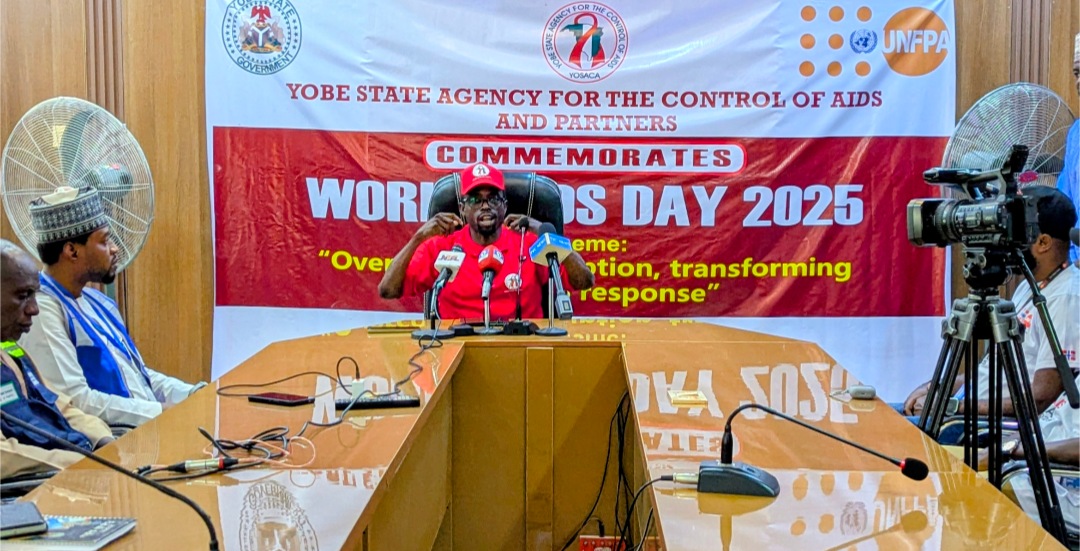
Yobe State Agency for the Control of AIDS (YOSACA) and development partners have commemorated the 2025 World AIDS Day, reaffirming commitment to sustaining gains and accelerating the state’s HIV response.
Dr Jibril Adamu Damazai, Executive Secretary of YOSACA, told journalists at a press conference in Damaturu that the occasion provided an opportunity to honour those affected, strengthen solidarity and renew efforts against stigma and discrimination.
He said the commemoration, themed “Overcoming Disruption, Transforming the AIDS Response”, underscored the need for stronger collaboration between the state, partners and communities to achieve epidemic control by 2030.
Damazai commended Gov. Mai Mala Buni for significantly improving support to the agency, including approving a permanent office site and raising YOSACA’s monthly running cost above N500,000 after years of receiving only N25,000.
He said the governor equally intervened in rehabilitating the agency’s vehicles, enabling uninterrupted outreach, community testing and referral services across all 17 Local Government Areas.
The executive secretary said Yobe would also hold a state-level ceremony on Dec. 2, to be chaired by the governor as part of activities marking the global event.
Damazai said the state had expanded HIV service delivery from seven comprehensive centres to more than 100 service points through the Hub-and-Spoke model, including 10 general hospitals and 84 community Spoke sites.
According to him, the state procured 120 million HIV test kits in 2025 to close supply gaps and strengthen community testing targeted at identifying new infections early.
He said Yobe currently had 9,854 persons living with HIV who were on treatment, with viral suppression helping to reduce transmission risks.
Damazai said the state had also reviewed its policy on premarital testing, making HIV, hepatitis B and genotype screening mandatory before marriage to promote awareness and reduce preventable risks.
He explained that although Yobe had a low HIV prevalence of 0.4 per cent, new infections were still being recorded, hence the need for intensified testing, treatment and community mobilisation.
The official said the state was preparing to assume greater responsibility for HIV programming as donor support gradually winds down, adding that sustained government funding would guarantee uninterrupted services.
Representatives of partner organisations, including AHNi, Society for Family Health, WHO, UNICEF and UNFPA, pledged continued technical support to Yobe’s HIV response.