
From Stabilisation Centres to Farmlands: A Lifeline for Malnourished Children

By Ahmed Isah
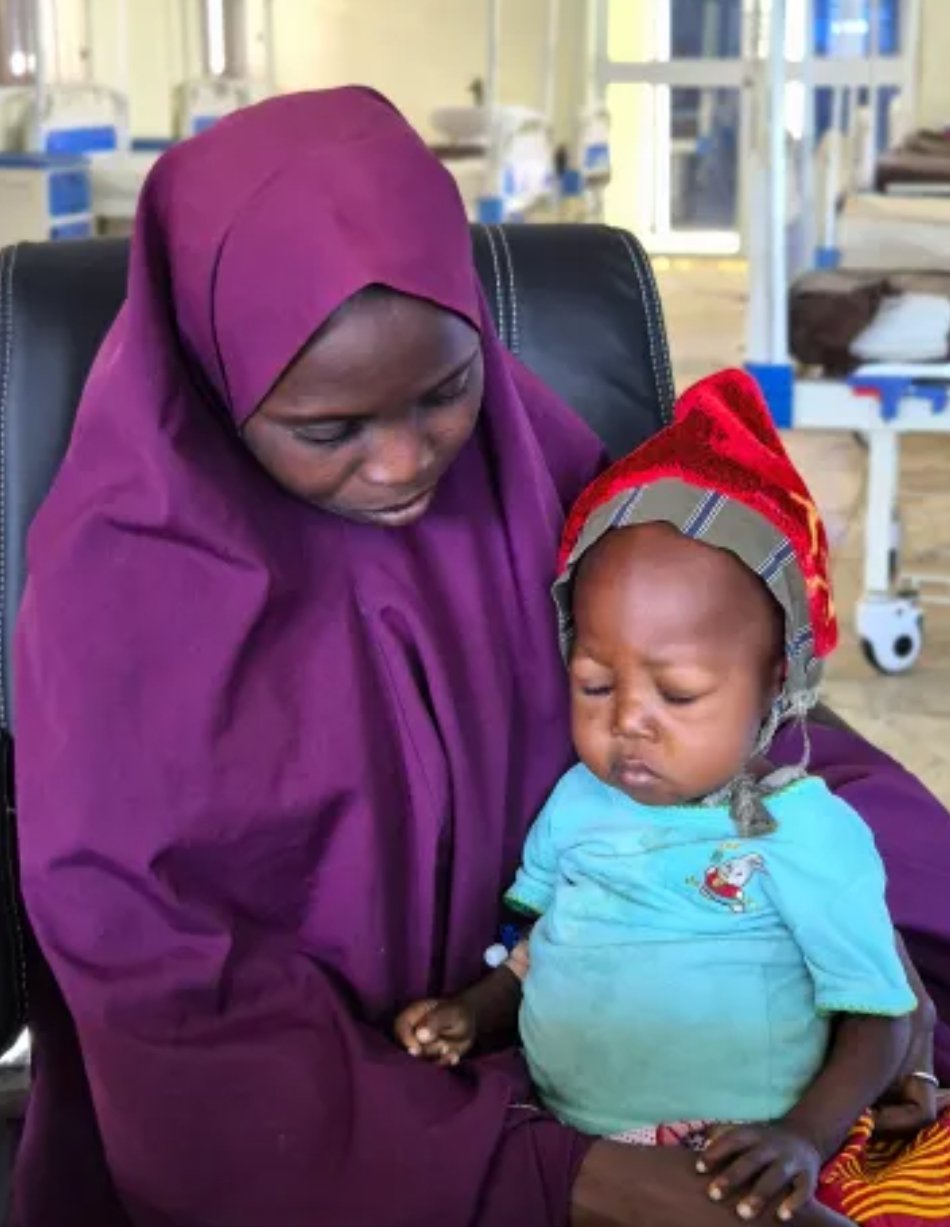
When Zainab arrived at a nutritional stabilisation centre in Damaturu, Yobe, her 22-month-old son Umar lay weak and barely conscious in her arms.
His face and feet were swollen, his skin stretched and fragile — signs of severe acute malnutrition that health workers say can quickly become fatal without urgent care.
“I thought I was going to lose him,” Zainab said, recalling the moment she feared the worst for her child.
For months, Umar had struggled to feed properly, losing weight and growing weaker as his family battled food scarcity caused by years of armed conflict in north-east Nigeria.
Health workers at the stabilisation centre immediately began therapeutic feeding and medical treatment to stabilise his condition.
Samira Hassan, a nurse at the centre, explained that the swelling was caused by nutritional oedema, a severe form of acute malnutrition resulting from prolonged lack of essential nutrients.
“Without urgent treatment, children with this condition rarely survive,” she said.
Within days of treatment, Umar’s swelling began to subside and his appetite slowly returned, marking the beginning of his recovery.
His story reflects a broader crisis affecting millions of children across the conflict-affected regions of northern Nigeria.
Humanitarian agencies estimate that about 6.4 million children under the age of five suffer from acute malnutrition across the north-east, north-west and north-central parts of the country.
Children, alongside pregnant and lactating women, remain the most vulnerable, particularly in remote communities with limited access to healthcare and nutritious food.
To respond to the crisis, the International Committee of the Red Cross (ICRC) supported the treatment of more than 348,000 people suffering from severe acute malnutrition in 2025 across Borno, Adamawa and Yobe.
The beneficiaries included more than 16,000 children under five and over 19,000 pregnant and lactating women treated in primary healthcare facilities and stabilisation centres.
However, humanitarian experts say treating malnutrition in hospitals alone cannot solve the problem.
Bob Wonder Panama, a nutrition specialist with the ICRC in Biu, explained that recovery must continue even after children leave the treatment centres.
“We treat an average of more than 1,000 children under five every year,” he said.
“To sustain their recovery, children receive a two-week supply of ready-to-use therapeutic food when they are discharged.”
To prevent relapse, the organisation has expanded community-based nutrition programmes across 125 communities in the north-east.
The initiatives include early detection of malnutrition using family upper arm circumference measurements, promotion of infant and young child feeding practices, and supplementary feeding programmes.
For many families, however, the struggle goes beyond access to health care.
Fatima, a displaced mother from Sabon Gari, now cares for 13 children after losing her family’s livelihood to conflict.
“When we were displaced, we lost our source of income,” she said.
“We depended on neighbours and small jobs just to eat.”
Without farmland or stable income, many displaced families find it difficult to provide adequate food for their children.
To address the root causes of malnutrition, humanitarian interventions increasingly combine medical treatment with livelihood support.
In 2025, more than 168,000 farmers received climate-smart seeds, solar-powered irrigation systems and other agricultural inputs to improve food production and household income.
During the lean season, over 17,000 vulnerable households also received three rounds of cash assistance to help them purchase food and essential items.
In addition, about 26,000 people were provided hygiene kits to reduce the risk of disease outbreaks and improve living conditions.
For families like Fatima’s, the agricultural support has helped restore food security.
“Our situation changed when we received improved seeds during the rainy season and cash during the lean season,” she said.
“We harvested enough corn, rice and vegetables to feed the children three times a day.”
Fifteen years into the insurgency in the north-east, humanitarian workers say the combination of medical treatment and livelihood support remains critical to breaking the cycle of hunger.
From stabilisation centres where children like Umar regain their strength, to farmlands where families rebuild their livelihoods, the support offers a vital lifeline for communities struggling to overcome malnutrition and conflict.