
Yobe Youth Groups Develop Scorecard to Assess 2027 Governorship Aspirants

By Ahmed Isah
Youth organisations in Yobe State have evolved a leadership scorecard to guide informed assessment of potential candidates ahead of the 2027 governorship election.
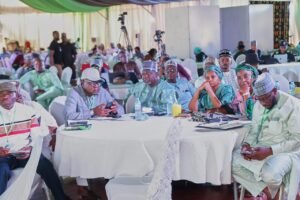
The framework emerged from a One-Day Youth Organisations Summit organised by the Coalition of Yobe-East Progressive Youths in Damaturu.
The summit, themed “Youth Voices for a Progressive Yobe: Identifying the Best Gubernatorial Material for 2027”, drew youths from associations, student bodies, civil society groups and community networks across the state.
Opening the summit, the coalition’s President, Dr. Yerima Goni, said the initiative aimed to reposition youths as informed stakeholders in governance rather than passive political observers.
Goni said the coalition was promoting objective evaluation of leadership based on integrity, experience, competence and development record, particularly as youths constituted the majority of the electorate.
He stressed the need for structured and evidence-based approaches to leadership assessment ahead of the 2027 general elections.
The keynote address was delivered by Malam Usman Bin Affan, who underscored the importance of deepening youth participation in governance beyond activism and voting.
Bin Affan identified opportunities for young people in public leadership and called for sustainable youth leadership pipelines and informed policy engagement.
The summit featured a panel session examining leadership and development challenges in Yobe, institutional cooperation, and the role of continuity and stability in governance.
Between 16 and 20 youth groups participated, alongside community leaders and elders, whose presence added intergenerational perspective to the deliberations.
A major highlight was a structured leadership scorecard exercise to assess potential governorship aspirants using clearly defined criteria.
Participants were divided into five independent groups to identify aspirants from Yobe East, South and North senatorial zones, irrespective of political party affiliation.
Each group assessed selected aspirants using a standardised scorecard with a maximum of 110 points, covering experience, competence, integrity, vision, development impact, loyalty, institutional cooperation and grassroots engagement.
Five aspirants emerged for assessment across the groups, including Kashim Musa Tumsa and Musa Mustapha from Yobe East, Abubakar D. Aliyu and Sen. Ibrahim Mohammed Bomai from Yobe South, and Sen. Ahmed Ibrahim Lawan from Yobe North.
Results showed varying levels of performance and recognition, with Sen. Ahmed Ibrahim Lawan recording the highest overall scores, averaging above 90 per cent across all five groups.
Other aspirants recorded strong scores where assessed but were selected by fewer groups, reflecting differing levels of recognition among participants.
Observers noted that the process clearly distinguished between popularity and performance, measuring leadership competence through objective criteria rather than perception alone.
Participants commended the transparency of the process and described the summit as one of the most structured youth-led political engagements in the state.
The coalition reiterated its non-partisan stance, stressing that the exercise did not constitute an endorsement of any aspirant.
It said the initiative was designed to reflect collective youth perception and promote evidence-based leadership discourse.
The summit ended with a call for sustained youth engagement in governance discussions as the 2027 elections approach.
Organisers expressed optimism that the scorecard framework would guide informed political participation among young people in Yobe State.