

Lady Turns Tricycle Riding into Path to Self-Reliance in Yobe
By Ahmed Isah
For many people in Damaturu, seeing a woman behind the wheel of a commercial tricycle may still attract a second look.
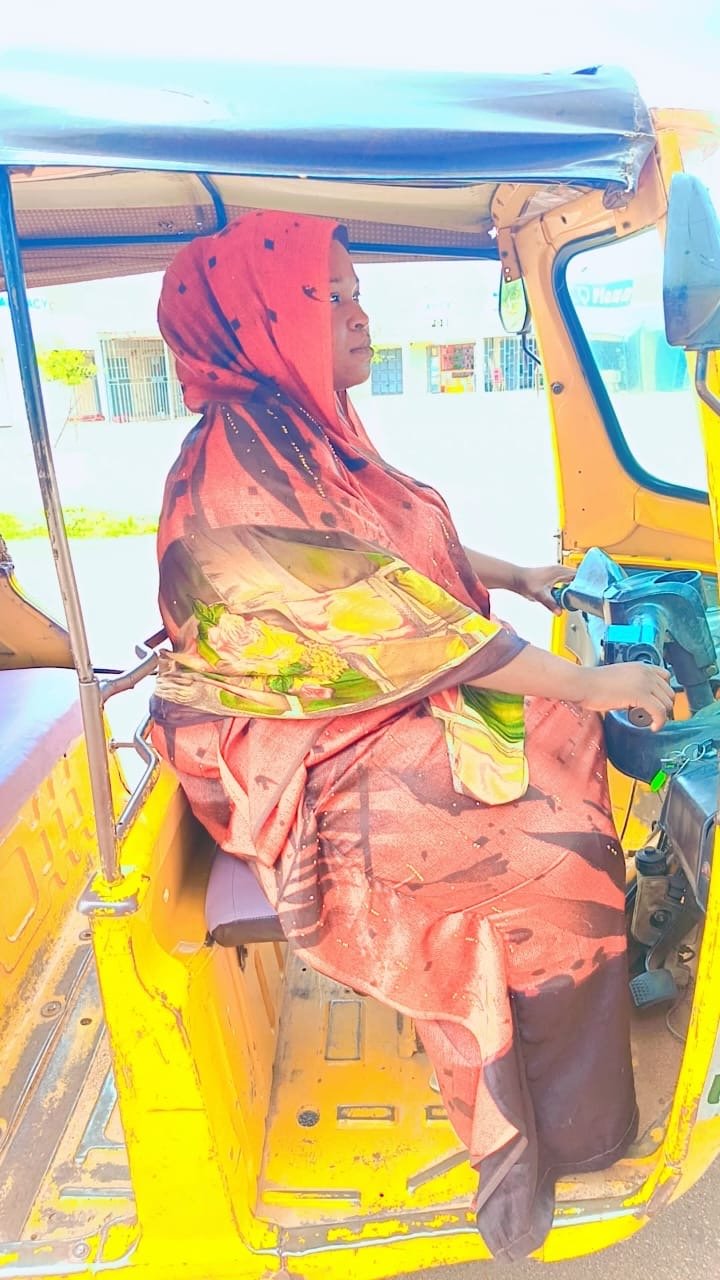
But for Rifkatu Adam, popularly known as Mami, it is simply a way of earning an honest living.
Mami is already in the business, navigating the streets of Damaturu with her tricycle while challenging an occupation that has, for years, been largely associated with men.
Her decision is not driven by a desire to prove people wrong alone. It is about survival, independence and the determination to create a job for herself.
“I want to have something I can call my own. I want to work and earn my living,” Mami says.
For her, commercial tricycle riding is more than transportation. It is an opportunity to become self-reliant and, perhaps more importantly, to show other women that the boundaries placed around them by society can be challenged.
She believes that women should not automatically avoid an occupation simply because it is traditionally dominated by men.
According to her, the most important consideration should be whether the work is legitimate and whether it protects a woman’s health, safety and dignity.
Mami hopes her presence on the streets will encourage other women to look around their communities and identify opportunities they can turn into sources of livelihood.
“If a woman sees another woman doing something, it can give her courage to try it too,” she says.
A service to fellow women
There is another reason Mami considers her work important.
Women make up a significant proportion of people who use commercial tricycles in Damaturu. She believes that having more female riders could make some women passengers feel more comfortable.
For Mami, seeing another woman operating the machine can provide reassurance and demonstrate that women can occupy spaces that have traditionally been reserved for men.
She therefore sees herself not only as a tricycle rider but also as a potential role model for women who may be looking for ways to become economically independent.
The challenge behind the wheel
Despite her determination, Mami faces a major obstacle: access to tricycles.
She says people who provide tricycles for commercial operation often prefer male riders, making it difficult for women who want to enter or remain in the business.
This, she says, is where government and well-meaning individuals can make a difference.
Mami is calling for support that would enable women like her to access tricycles and operate them on sustainable arrangements.
She believes such intervention could create employment for women while also helping them contribute to the economic wellbeing of their families.
For her, the support does not necessarily have to end with the provision of a tricycle. Government and other stakeholders could develop programmes that provide women with access to affordable financing, tricycles and other forms of assistance that would enable them to establish themselves in the transport business.
Mami’s ambition goes beyond her own livelihood. She wants her story to become an example for other women in Damaturu and beyond.
She wants a woman who sees her riding through the streets to think: If she can do it, perhaps I can do something for myself too.
That is the message she hopes to leave behind.
Women, she believes, should be encouraged to explore opportunities within their immediate environment rather than wait indefinitely for employment or financial support from others.
Her experience also raises a broader question about women’s participation in informal economic activities: how many women could become self-reliant if the gender barriers surrounding certain occupations were removed?
For Mami, the answer is simple — give women the opportunity and allow their determination to do the rest.
Her journey behind the wheel is therefore not just about driving a tricycle.
It is about creating a livelihood, serving her community, challenging a stereotype and, ultimately, encouraging another woman to take the first step toward economic independence.