
NHRC Calls for Human Rights Impact Assessment in Legislative Process
By Ahmed Ahmed
The National Human Rights Commission (NHRC) has urged legislators to mainstream human rights principles and Human Rights Impact Assessment (HRIA) into every stage of the legislative process
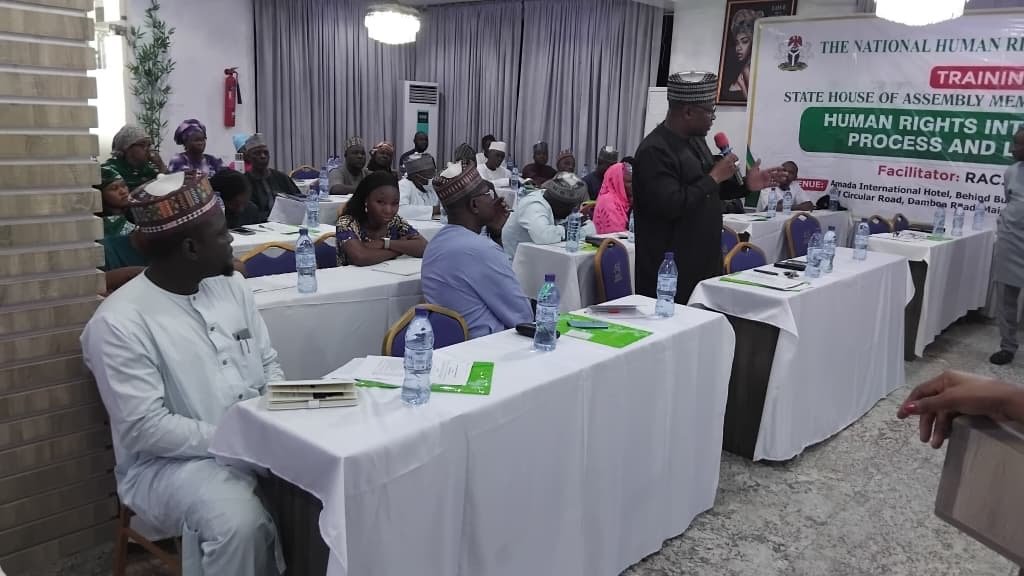
Dr Tony Ojukwu, Executive Secretary of the NHRC made the call at a 1-day training for legislators on mainstreaming human rights and HRIA into legislation on Saturday in Maiduguri.
Ojukwu who is also the President, Network of National Human Rights Institutions in West Africa (NNHRI-WA) the training to ensure that laws protect citizens’ dignity, freedoms and legitimate aspirations.
The Executive Secretary, represented by Ms Jummai Mshelia the State Coordinator of the NHRC,said the Commission was established under the NHRC Amendment Act 2010 to promote, protect and enforce human rights in Nigeria.
He said the Commission was also empowered to review proposed legislation and administrative measures to ensure their consistency with the Constitution and Nigeria’s regional and international human rights obligations.
According to him, the quality of democracy should be measured not by the number of laws enacted, but by their quality, inclusiveness and compliance with human rights standards.
He noted that legislation influenced access to justice, education, healthcare, housing, security, livelihoods and civic participation, stressing the need for rigorous scrutiny of every bill before passage.
Ojukwu said HRIA would enable lawmakers to identify potential risks and prevent violations at an early stage.
“Particularly those that could disproportionately affect women, children, persons with disabilities, older persons, internally displaced persons and other vulnerable groups.
He described HRIA as a practical decision-making tool rather than a bureaucratic hurdle, saying it would enhance the quality, legitimacy and sustainability of legislation.
The Speaker of the Borno State House of Assembly, Mr Abdulkarim Lawan, represented by the member representing Ngala Constituency, Alhaji Bukar Abatcha, said the legislature had a responsibility to ensure that human rights principles were reflected in laws and oversight functions.
Abatcha listed the Child Protection Law, Violence Against Persons (Prohibition) Law and Administration of Criminal Justice Law among legislative interventions by the Assembly.
He added that the Borno State Disability Protection Bill, currently at committee stage, further demonstrated the Assembly’s commitment to inclusion and protection of persons with disabilities.
He, however, stressed that legislation alone was insufficient, noting that effective human rights protection required implementation, oversight, public awareness and continuous review.
Also, Ms Okwa Morphy, facilitator, urged lawmakers to uphold non-discrimination, transparency, accountability and inclusion in the legislative process.
Morphy said human rights mainstreaming involved incorporating human rights principles into policy design, bill drafting, legislative review, debate, amendment, implementation and oversight.
She stressed the importance of the participation of civil society organisations and affected communities in public hearings.
“Their contributions would help prevent possible violations of constitutionally guaranteed rights,” she said.
She said effective HRIA should consider the interdependence and indivisibility of rights,
Morphy noted that issues such as a clean environment and education could have wider implications for the enjoyment of other fundamental rights.
NAN