
Erosion, flooding threaten homes, livelihoods in Yobe
By Ahmed Abba
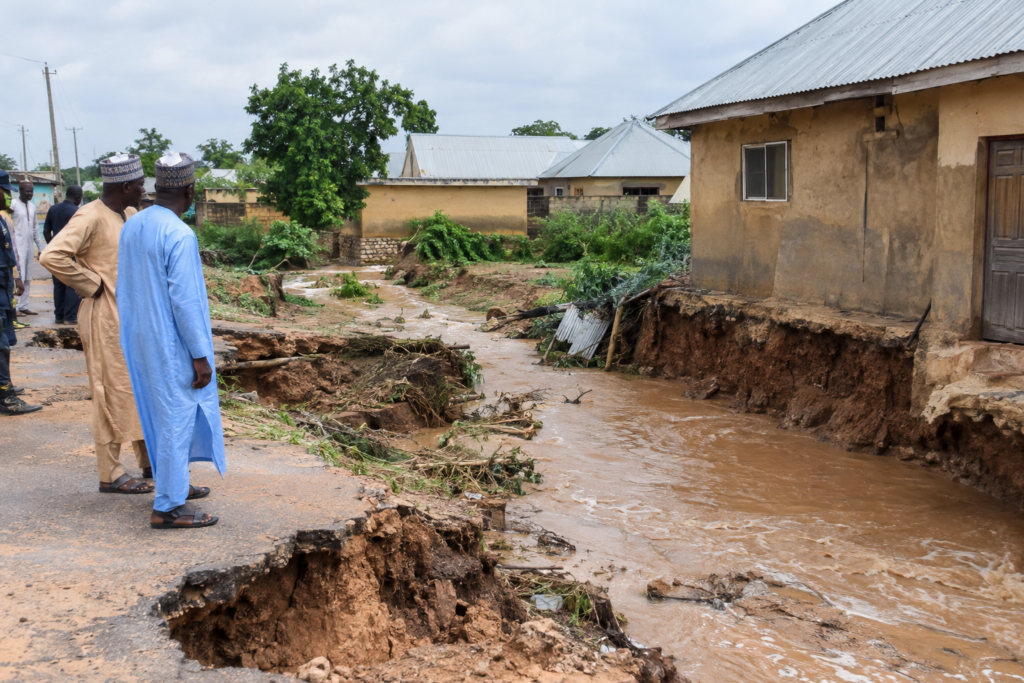
DAMATURU – Residents of erosion- and flood-prone communities in Yobe are facing recurring threats to their homes, farmlands and livelihoods due to intense rainfall, blocked drainage channels and loss of vegetation.
The situation has prompted calls for sustained intervention by the state and Federal Governments to strengthen drainage systems, restore degraded land and improve the resilience of vulnerable communities.
Dr Ibrahim Jalo, Director of Search and Rescue Operations, Yobe State Emergency Management Agency (YOSEMA), disclosed this in an interview with Our Correspondent in Damaturu.
Jalo said the state continued to experience localised erosion and flood-related land degradation, particularly during periods of intense rainfall.
He said the problem was more pronounced around urban settlements, drainage channels, low-lying areas and locations where natural watercourses had been obstructed or vegetation cover lost.
According to him, recent flood incidents affected communities in Damaturu, Nguru, Machina and Bursari Local Government Areas (LGAs).
He explained that gully and sheet erosion were more common in Yobe than conventional landslides because of the state’s semi-arid environment.
Jalo said the effects of erosion and flooding included damage to residential buildings, roads, drainage infrastructure, agricultural land and household property, as well as disruption of businesses and temporary displacement of residents.
He recalled that during the August 2025 flood incident in Potiskum, preliminary validation identified 21 affected communities, while 102 households comprising 612 persons were sheltered at Sabon Gari Primary School.
The director stressed that the figures related to the 2025 Potiskum incident and should not be regarded as the current statewide figures, as verification of communities and households affected by the August 2026 floods was ongoing.
He said the state government, through relevant agencies including YOSEMA and the Ministry of Environment, had undertaken measures such as rapid assessment of affected areas, emergency response, clearing of blocked drainage channels and community sensitisation.
Jalo added that the state also collaborated with the National Emergency Management Agency (NEMA) and humanitarian partners in responding to emergencies.
He said measures to reduce future displacement included construction and rehabilitation of drainage systems, flood-control structures, restoration of degraded land, improved water management, early-warning systems and identification of vulnerable communities.
Jalo identified intense and increasingly erratic rainfall, flash floods, inadequate drainage systems, blocked waterways, vegetation loss, deforestation and expansion of settlements into drainage pathways as major factors contributing to flooding and erosion.
He called for increased funding for erosion and flood-control infrastructure, technical support for risk mapping and vulnerability assessment, improved hydrological and meteorological monitoring and stronger early-warning systems.
The official also advocated integrated watershed management, gully rehabilitation, afforestation, protection of natural drainage channels, climate-smart agriculture and stronger community participation in environmental management.
Meanwhile, Mr Ibrahim Daya, Project Monitoring and Evaluation Officer, Agro-Climatic Resilience in Semi-Arid Landscapes (ACReSAL), Yobe State Project Management Unit, said the programme had implemented interventions to control erosion, flooding and land degradation in the state.
Daya identified uncontrolled excavation, blocked drainage channels, deforestation and expansion of settlements as some of the human activities worsening erosion.
He said indiscriminate excavation of laterite and other construction materials, particularly around urban settlements, could accelerate gully formation and environmental degradation.
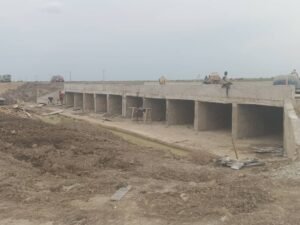
According to him, ACReSAL implemented an 8.9-kilometre flood and erosion-control drainage project in Damaturu, following the main watercourse from Nasarawa towards Sulfuma.
He said the project had improved stormwater flow and helped contain flooding in the areas covered, noting that there had been no major flooding there in the preceding two years.
Daya, however, stressed the need for proper control of excavation sites and regular maintenance of drainage infrastructure.
He said vegetation loss was another major factor contributing to erosion and land degradation, particularly because of dependence on firewood in many communities.
The official urged residents to embrace agroforestry and vegetation restoration to protect the soil and reduce runoff.
He said ACReSAL had raised about three million seedlings over the past three years for distribution to government institutions and communities across the state.
Daya added that more than 1.5 million seedlings were planted in 2025 across participating LGAs.
He said the programme had also established and maintained shelterbelts and plantations in locations including Kukareta, Warsala, Lawan Kalm, Blangwa, Aponori in Nguru, Tulo and Gamio in Karasuwa.
According to him, ACReSAL had about 14 to 15 established shelterbelts, with sustainability plans developed to ensure that planted trees survived and matured.
He said the plans included maintenance arrangements, such as the provision of watchmen and watering personnel for plantations and shelterbelts.
Daya said the interventions were aimed at reducing land degradation, improving environmental protection and strengthening climate resilience across the state.