

Borno Celebrates World Children’s Day, Highlights Youth-led Solutions to Malnutrition
By Ali Mohammed Zanna, Maiduguri
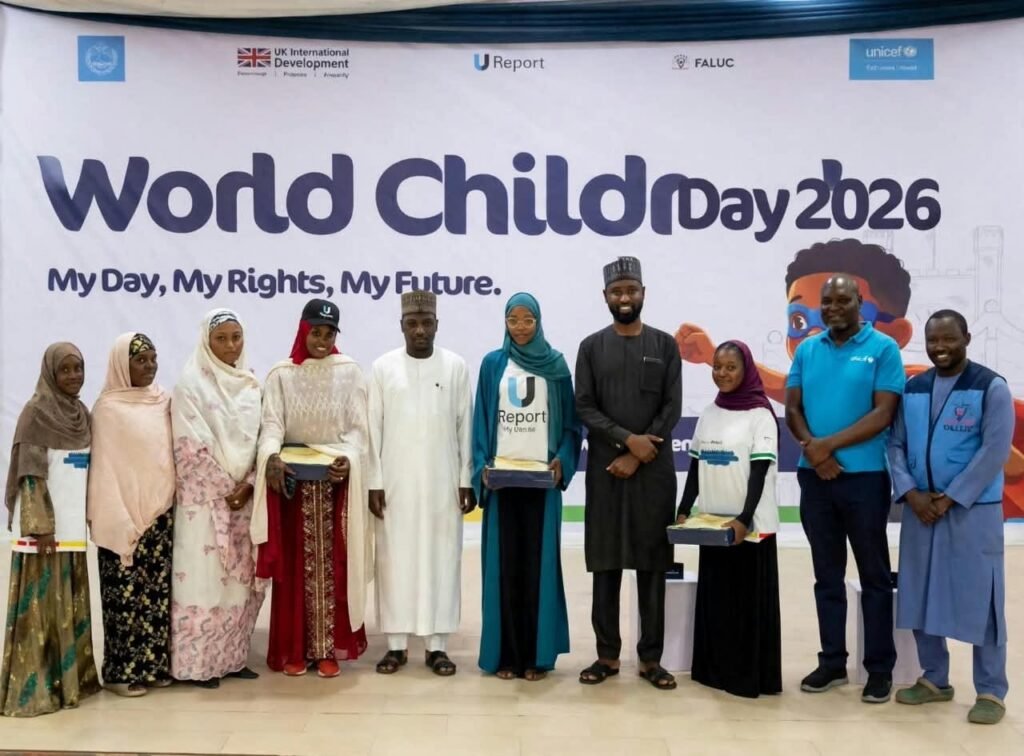
Children, government officials, development partners and civil society organisations have gathered in Maiduguri to commemorate the 2026 World Children’s Day, with a focus on promoting children’s rights and encouraging youth-led solutions to malnutrition.
The celebration, organised by the United Nations Children’s Fund (UNICEF) in partnership with the Borno State Government, was held under the theme, *“My Day, My Rights, My Future.”*
The event also featured the recognition of winners of the Borno Youth-led Nutrition Innovation Challenge, an initiative designed to encourage young people to develop practical and affordable solutions to nutritional challenges in their communities.
Speaking at the occasion, UNICEF Chief of Maiduguri Field Office, Mr Francis Butichi, said World Children’s Day provided an opportunity to reaffirm commitment to protecting children’s rights, improving their welfare and creating an environment where they could achieve their full potential.
He commended children, mothers, families and communities across the North-East for their resilience despite the challenges posed by insecurity and other humanitarian difficulties.
Butichi explained that every child deserved the right to life, proper healthcare, adequate nutrition and protection from preventable diseases, including acute malnutrition.
He described the Youth-led Nutrition Innovation Challenge as an important platform for empowering young people to contribute to addressing malnutrition through locally developed ideas and community-based interventions.
According to him, the initiative, funded by the United Kingdom’s Foreign, Commonwealth and Development Office (FCDO) and supported by UNICEF, promotes the use of affordable, locally available and nutritious food to tackle malnutrition.
He said finalists in the competition received training in basic nutrition, public speaking and community engagement before their proposals were assessed by a panel of judges drawn from academic institutions and other relevant fields.
The UNICEF official expressed concern over the prevalence of acute malnutrition in the North-East, noting that projections by the Integrated Food Security Phase Classification (IPC) indicated that more than two million children under five in Borno and Yobe states could experience acute malnutrition in 2026.
He added that over 750,000 of the affected children were projected to suffer from severe acute malnutrition.
Butichi disclosed that UNICEF and government partners, with support from donors, including Germany and the United Kingdom, had reached more than 400,000 children in Borno and Yobe states with treatment over the past three years.
He encouraged young participants to sustain their innovations, assuring them of UNICEF’s continued support in promoting community-driven approaches to improving children’s nutrition.
Also speaking, the Director of Community and Family Health at the Borno State Primary Health Care Development Board, Dr Mala Abdulwahab, said addressing malnutrition required strong community participation rather than relying solely on hospitals and health facilities.
She identified early identification of malnutrition, counselling for mothers and caregivers, immunisation, regular growth monitoring and accessible primary healthcare services as essential measures for improving children’s health.
Abdulwahab commended UNICEF and other development partners for supporting community-based interventions and reaffirmed the Board’s commitment to encouraging youth-led initiatives that promote healthy nutrition and child development.
She also urged parents and caregivers to utilise available primary healthcare services to ensure children receive timely medical attention.
The event attracted the Executive Secretary of the Board, Mohammed Alhaji Arab; the Executive Director of the Network of Civil Society Organisations of Borno State, Mr Abubakar Abdullahi Sulaiman; representatives of the University of Maiduguri; members of the Borno State Children’s Parliament; local government officials, U-Reporters and journalists.
Children featured prominently in the celebration through presentations, drama performances and pitches of innovative ideas aimed at improving nutrition within their communities.
Members of the Borno State Children’s Parliament and U-Reporters called for greater recognition of children as active participants in addressing challenges affecting their lives.
They emphasised their rights to quality education, adequate food, good healthcare and participation in decisions concerning their future.
Some finalists also said their participation in the nutrition challenge had improved their confidence, teamwork and ability to educate community members on the importance of consuming locally available nutritious foods.
They appealed to government authorities, parents and development partners to support their ideas and help expand their reach to more communities.
In his closing remarks, Butichi urged the government to ensure timely release of funds for nutrition interventions, called on stakeholders to give young people meaningful roles in decision-making, and appealed to development partners to sustain predictable financial and technical support.
He further encouraged stakeholders to work directly with young innovators and expand successful community-based solutions to address malnutrition.
The celebration ended with renewed calls for stronger collaboration among government, development partners, families and young people to protect children’s rights and improve their wellbeing.
The event reinforced the importance of giving children the opportunity, knowledge and support to contribute meaningfully to solving challenges affecting their communities.

