
Stakeholders push domestication of mental health law in Borno
By Ahmed Isah
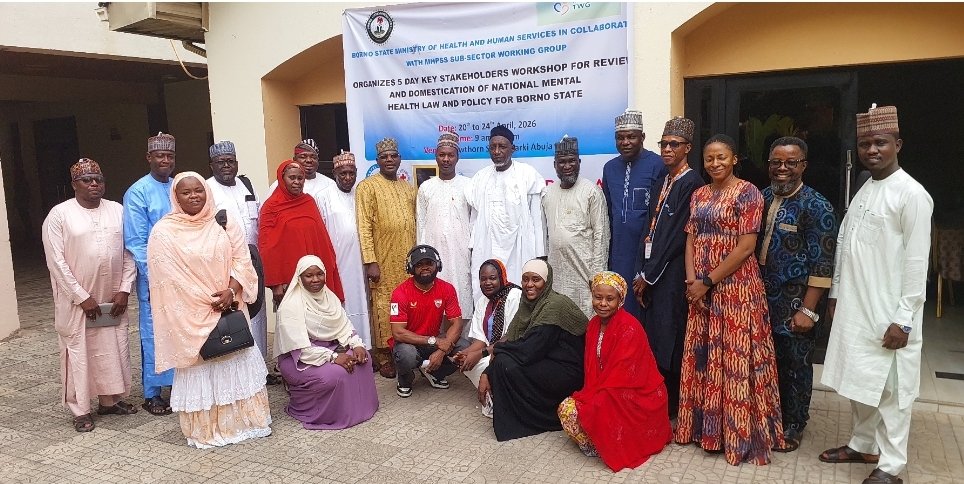
Federal and Borno State stakeholders have concluded a five-day engagement in Abuja to advance domestication of Nigeria’s National Mental Health frameworks in Borno.
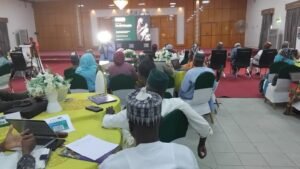
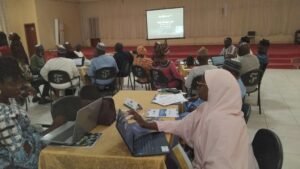
The engagement, held from April 20 to April 24, brought together officials of the Federal Ministry of Health, Borno State Government, legislators, policymakers, mental health professionals, civil society organisations and development partners.
Participants reviewed the National Mental Health Act, 2021, and the National Mental Health Policy, 2024, with a view to adapting them to Borno’s context.
They said the domestication process would strengthen governance, protect the rights of persons with mental health conditions and ensure sustainable financing and service integration.
Mrs Grace Ogunleye, who represented the Federal Ministry of Health, said aligning national frameworks with state realities was essential for effective service delivery.
Ogunleye noted that domestication would ensure accessible mental health services, protection of rights and responsive governance structures tailored to Borno’s peculiar challenges.
She added that the state required policies that addressed the impact of insurgency, displacement and prolonged humanitarian conditions.
Our Correspondent reports that the workshop featured technical presentations, plenary discussions and drafting sessions.
Stakeholders reviewed key provisions of the national law and policy, assessed gaps and developed a draft framework for the Borno State Mental Health Policy.
They also harmonised recommendations to support legislative and policy adoption in the state.
Dr Zannah Hassan Boguma, Special Adviser on Culture and Regional Integration, said the state government was committed to strengthening mental health governance.
Boguma said the process would enable the state to deliver laws and policies that protect citizens and integrate services into the health system.
Mr Zion Ameh, the lead facilitator, described domestication as a critical step toward ensuring dignified, rights-based and responsive care for affected individuals and families.
Mr Martins Orga, representing Save the Children International, stressed the need to address trauma among children and young people in Borno.
Orga said partners would continue to support government and communities in building systems that promote healing and protection.
Ms Rita Akoji-Umaru of the International Committee of the Red Cross underscored the need to integrate mental health and psychosocial support into humanitarian response.
She said conflict often left invisible wounds that required structured and sustained intervention.
Mr Sabiu Shehu, Advocacy and Communications Coordinator, RESILAC, emphasised the importance of strong governance systems in supporting recovery and resilience.
He noted that effective mental health systems would enable communities to rebuild and thrive despite adversity.
Mr Ogenyi Isaac Agbo, Mental Health and Psychosocial Support Technical Adviser, Première Urgence Internationale Nigeria Mission, highlighted the importance of a formal legal framework.
Agbo said the domestication would provide a roadmap for service delivery and strengthen advocacy for stakeholder support.
He urged other states to adopt similar frameworks to improve mental healthcare nationwide.
At the end of the engagement, stakeholders validated draft versions of the Borno State Mental Health Act and Policy and adopted a communiqué.
They also agreed on a roadmap for submission of the documents to relevant ministries, the state executive council and the House of Assembly.
Participants described the outcome as a significant step toward inclusive, rights-based and sustainable mental health governance in Borno.