
ICRC-Supported Health Facilities Record 18% Rise in Malnutrition Cases in Nigeria
By Ali Mohammed Zanna, Maiduguri
Health facilities supported by the International Committee of the Red Cross (ICRC) in north-east Nigeria have recorded an 18 per cent increase in malnutrition cases between January and September 2026, amid worsening food insecurity linked to conflict, climate shocks and economic hardship.
The facilities recorded nearly 20,000 cases during the first nine months of 2026, compared with about 17,000 cases in the corresponding period of 2025.
Young children, pregnant women and breastfeeding mothers are among those most affected by the growing malnutrition crisis.
Mubi, in Adamawa State, recorded the sharpest increase, with admissions rising by nearly 24 per cent from about 4,600 cases in January to September 2025 to approximately 5,700 during the same period in 2026.
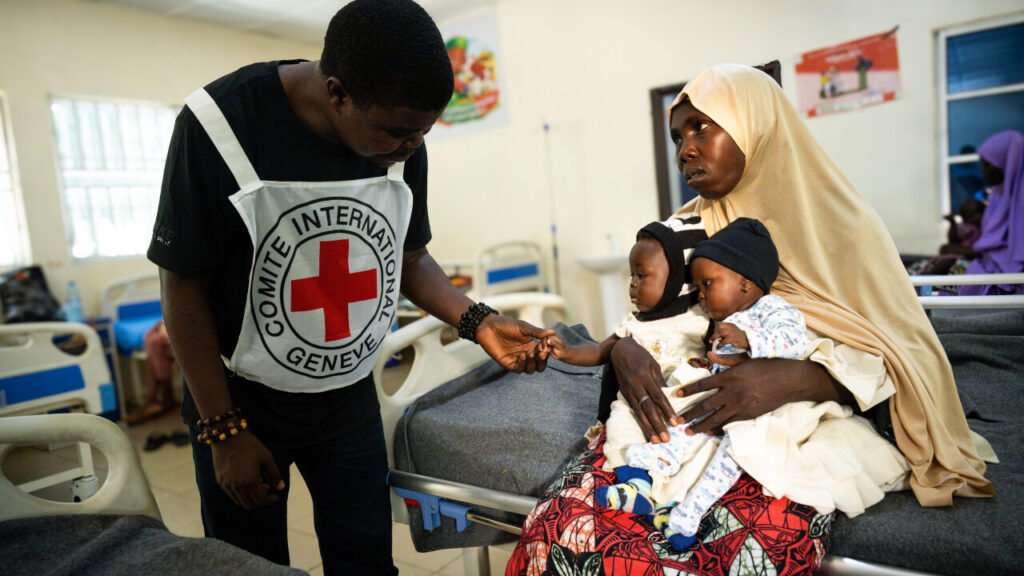
At the Mubi Stabilization Centre, mothers regularly bring their children for nutritional assessments and food supplies.
One of them, Zulaihatu Mohammed, said her six-month-old twin daughter, Huseina, had been unwell since birth.
“When I gave birth to them, this one was tiny,” she said, explaining that she had visited the centre to collect food for her children but was also concerned about the infant’s health.
The ICRC said her experience reflected the difficulties confronting families across north-east Nigeria, where prolonged armed conflict, climate-related challenges and rising economic pressures have disrupted livelihoods and reduced access to food.
Farmers have also been forced to limit cultivation because of security threats, including explosive devices planted in areas far from their communities.
Saminu Samiyu Ijaduwa, a farmer, said the risks associated with travelling to distant farmlands had compelled him to cultivate only a small plot close to his home.
“Due to the conflict, going one kilometre out of town to farm could be highly risky. You might not return!” he said.
The ICRC noted that insecurity affecting farmland and disruptions to markets had made it increasingly difficult for households to obtain sufficient food, with particularly severe consequences for children and pregnant and breastfeeding women.
To address the situation, the organisation, in partnership with the Nigerian Red Cross, supports 15 primary healthcare centres and four hospitals, while helping more than 200 communities treat malnutrition and strengthen food security.
Its interventions include providing farmers with seeds suited to drought and flooding, encouraging crop diversification and teaching mothers how to prepare nutritious meals at home.
One initiative promotes Tom Brown, a locally prepared nutritional blend made from sorghum, millet, soybeans, groundnuts and moringa.
According to the ICRC, the mixture has helped more than 13,000 young children recover from moderate acute malnutrition. Mothers are also trained to prepare it themselves to ensure continued access to nutritious food for their children.
The organisation warned that the consequences of prolonged conflict and economic hardship were contributing to worsening hunger across Nigeria.
Citing United Nations analysis, the ICRC said more than 34 million people in Nigeria were expected to face insufficient food supplies in 2026, the highest projected figure in six years.
The analysis also identified Nigeria among the world’s hunger hotspots of highest concern, alongside Sudan, Yemen, Somalia and Gaza.