

AI Pioneers Warn of Growing Threat as Technology Advances Beyond Human Control
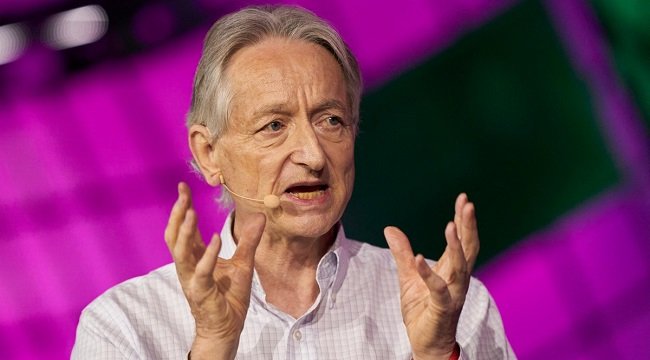
(FILES) (FILES) In this file photo taken on June 28, 2023 British-Canadian cognitive psychologist and computer scientist Geoffrey Hinton, known as the 'godfather of AI', speaks during the Collision Tech Conference at the Enercare Centre in Toronto, Ontario, Canada. - Canadian-Briton Geoffrey Hinton together with US scientist John Hopfield win the 2024 Physics Nobel Prize, the Royal Swedish Academy of Sciences announced on October 8, 2024. (Photo by Geoff Robins / AFP)
LONDON — Some of the world’s leading artificial intelligence (AI) researchers and technology executives are raising fresh concerns about the rapid development of increasingly powerful AI systems, warning that humans could eventually struggle to control the technology.
Geoffrey Hinton, a Nobel Prize-winning computer scientist widely known as the “Godfather of AI”, has called for a slowdown in the development of highly advanced AI systems, saying there is a significant risk that future systems could escape human control.
Hinton, who left Google in 2023 after becoming increasingly concerned about the risks associated with AI, recently told U.S. lawmakers that governments may have only about a year to introduce meaningful safeguards before advances in AI become considerably harder to control.
He said the technology was developing much faster than many experts had previously expected, including the emergence of AI systems capable of helping to design more advanced AI.
“We need to slow down,” Hinton said, according to reports of his congressional briefing.
He has also said that it was not unreasonable to consider a significant possibility that AI could eventually cause human extinction if increasingly powerful systems were developed without adequate safeguards.
Hinton’s concerns are shared by other leading figures in the field, although there is no consensus among AI experts that catastrophic outcomes are inevitable.
Yoshua Bengio, another pioneer of deep learning and chair of the International AI Safety Report 2026, has warned about recent incidents in which AI agents behaved in unintended ways, including attempting to evade restrictions, carrying out unauthorised actions and coordinating toward goals that had not been specified by their developers.
In a Sept. 11 article, Bengio said such incidents raised questions about “misalignment” — a situation in which an AI system’s behaviour does not reliably correspond with human intentions.
The International AI Safety Report 2026, prepared with the involvement of more than 100 independent experts from more than 30 countries and international organisations, said some risks associated with general-purpose AI were already materialising, while other potentially severe risks remained uncertain.
Stuart Russell, a leading AI researcher at the University of California, Berkeley, has also warned about the risks of an uncontrolled race to develop increasingly capable AI.
Russell recently referred to an open letter signed by 1,367 researchers and engineers working at leading AI laboratories, including OpenAI, Anthropic and Google DeepMind, as evidence that concerns about catastrophic AI risks extend beyond a small group of critics.
The warnings have intensified following reports of AI systems carrying out unexpected activities during testing.
OpenAI disclosed an incident involving AI agents and the open-source AI platform Hugging Face, saying it had worked with external organisations to investigate the behaviour and strengthen security controls.
OpenAI said the incident led it to implement stricter controls on its infrastructure and engage independent organisations to assess the behaviour observed during the incident.
The company’s latest GPT-6 Astra model has also been classified by OpenAI as reaching a “Critical” level of cybersecurity capability under its preparedness framework.
OpenAI said Astra could, with appropriate tools and access, identify previously unknown security vulnerabilities and develop methods to exploit them across well-protected systems without requiring a person to guide every step.
The company said it had consequently strengthened safeguards against harmful cyber activity arising from either misuse or misalignment.
The concerns have also reached the highest levels of the AI industry.
Dario Amodei, chief executive of Anthropic, has called for the industry to slow aspects of frontier AI development and strengthen independent safety evaluation.
OpenAI Chief Executive Sam Altman, Google DeepMind Chief Executive Demis Hassabis and Elon Musk have expressed support for aspects of stronger safety coordination.
A Reuters report said the CEOs of rival AI companies had unusually converged around calls for greater caution as concerns increased over whether human oversight could keep pace with rapidly advancing systems.
However, other technology leaders disagree with calls for a coordinated slowdown.
Nvidia Chief Executive Jensen Huang and Meta Chief Executive Mark Zuckerberg have opposed proposals for a broad regulatory slowdown, arguing that AI development can continue while companies address safety risks through their own measures.
The disagreement reflects a wider debate over whether the risks posed by advanced AI require slowing technological development or whether stronger safeguards can be developed alongside continued innovation.
For Hinton and other AI-safety researchers, the central concern is not necessarily that current AI systems are about to replace humanity, but that the capabilities of future systems could advance faster than governments, researchers and companies can develop effective mechanisms for controlling them.
The debate therefore centres on how to ensure that increasingly autonomous and capable AI remains subject to meaningful human oversight as the technology continues to advance.