Yobe, EU, partners deepen collaboration on sustainable development, recovery
By Ahmed Isah
The Yobe Government and development partners have reaffirmed their commitment to strengthening governance and promoting sustainable development through long-term investment and post-conflict recovery initiatives.
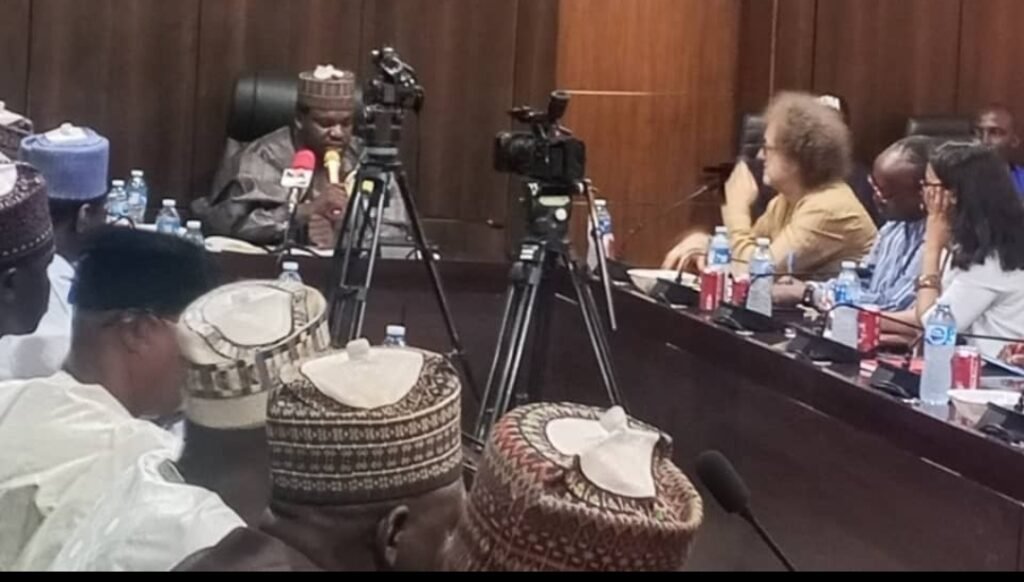
The Acting Secretary to the State Government, Dr Mohammed Goje, stated this on Monday while receiving a delegation of development partners led by Mr Massimo De Luca, Head of Cooperation, European Union (EU) Delegation to Nigeria and ECOWAS, at the Government House, Damaturu.
The delegation included representatives of the United Nations High Commissioner for Refugees (UNHCR), International Organisation for Migration (IOM), UN-Habitat, Deutsche Gesellschaft für Internationale Zusammenarbeit (GIZ), Agence Française de Développement (AFD), Save the Children and Action Against Hunger.
Goje said the meeting focused on strengthening collaboration to ensure that governance remained central to sustainable recovery and development efforts in the state.
He said the state government was committed to institutional reforms, policy implementation and improved coordination to guarantee lasting impact beyond donor-supported projects.
According to him, development programmes are more sustainable when they align with government priorities and actively involve local communities.
Goje said the state had set a nine-month implementation timeline for key activities under the current recovery programme.
He disclosed that the government had allocated 14 acres of land in Damaturu for the construction of 100 housing units as part of the recovery initiative.
According to him, the housing project will be implemented under a Build-Operate-Transfer (BOT) arrangement to support durable resettlement and recovery efforts.
The acting SSG said the government would continue to strengthen local capacity and ensure that returnees, internally displaced persons, host communities and persons with disabilities benefited from integrated support, including housing, livelihoods and access to essential services.
Earlier, De Luca said the EU remained committed to supporting durable solutions that promoted long-term development rather than short-term humanitarian assistance.
He said the EU’s Global Gateway strategy sought to mobilise public and private investments through partnerships that would support sustainable infrastructure and economic development.
“We are looking beyond humanitarian assistance to investments that will create lasting impact.
“Our objective is to work closely with the state government and other partners to ensure that available resources achieve maximum results,” he said.
De Luca said the LASAWAMA project, being implemented in collaboration with GIZ and AFD, would support water sector management and identify priority investments to improve services for displaced persons and host communities.
He commended the Yobe Government for its commitment to creating an enabling environment for development partners.
The meeting ended with both sides reaffirming the need for an area-based approach that combines immediate humanitarian support with long-term resilience and sustainable development.